

Can You Paint Semi Gloss Over Semi Gloss? (Yes!)
If you’re staring at a semi-gloss wall and wondering if you can just slap another coat of semi-gloss paint over it, good news: you can!
You don’t need to strip the old paint down to the bare surface first.
However, there’s a little prep work involved if you want the new paint to actually stick and look good.
Skip that part, and you could end up with peeling, chipping, or an uneven finish later.
In this post, we’ll show you how to paint semi gloss over semi gloss like a PRO.
Can You Paint Semi-Gloss Over Semi-Gloss?
Yes, you can paint semi gloss over semi gloss. In fact, repainting semi-gloss surfaces is pretty common, especially on doors, trim, cabinets, walls, and other areas that need a finish that’s easy to clean.
The important thing is not to treat the old semi-gloss like a regular flat or matte-painted surface.
Semi-gloss is smoother, which means you need to create a better surface for the new paint to bond to.
You also want to make sure the existing paint is in decent condition. If it’s firmly attached and free from peeling, cracking, or major damage, you can usually work right over it.
If the old paint is peeling or flaking badly, though, deal with those problems first.
Also Read: Can You Paint Eggshell Over Flat?
Prep Semi-Gloss Before Painting!
Semi-gloss paint has a smooth, shiny finish, which makes it easy to clean but not always the easiest surface for new paint to grip.
If you paint directly over it without preparation, the fresh coat may not bond properly. It can look fine at first and then start scratching, peeling, or flaking with normal use.
Luckily, you don’t need to make this into a huge project.
We’ll go over how to do this next.
How To Paint Semi-Gloss Over Semi-Gloss
Once the surface is clean and prepared, the actual painting is pretty straightforward.
Here’s the basic process. Take it step-by-step, do not rush the drying intervals, and you will get gorgeous, streak-free results every single time.
#1 Clean The Existing Surface
Start with a clean surface.
Use a suitable household cleaner to remove dirt, grease, dust, and other buildup. You don’t need to go overboard, but don’t rush this step either.
Pay extra attention to areas around door handles, light switches, kitchens, and other spots that collect fingerprints or grease. These contaminants can make it harder for the new paint to stick.
After cleaning, give the surface enough time to dry completely before moving on.
Also Read: Can You Add Water To Latex Paint?
#2 Lightly Sand The Old Finish
Now it’s time to deal with that shiny semi-gloss surface.
Use fine-grit sandpaper, such as 180- to 220-grit, and lightly sand the entire area.
Just dull the sheen rather than remove the existing paint. You should end up with a surface that looks slightly less shiny and feels a little rougher to the touch. That gives the new paint something better to grab onto.
Don’t press too hard. Heavy sanding can create unnecessary scratches or expose the material underneath, especially on trim, doors, or cabinets.
#3 Remove Sanding Dust
Now that you have created a fine layer of powdery paint dust, you need to get rid of every single speck of it before opening your paint can.
Leaving dust behind turns your silky new coat into coarse sandpaper, which completely ruins that sleek semi-gloss appeal.
Here is the quickest way to tackle the dust:
- Vacuum up the bulk of the loose powder along trim and floors using a soft brush attachment.
- Wipe the entire surface with a tack cloth or a damp microfiber cloth to capture remaining grit.
- Let the surface dry completely before applying any liquid coating.
- Double-check corners with your bare hand to ensure not a single rogue grain remains.
#4 Apply Primer When Needed
Primer isn’t always necessary when painting semi-gloss over semi-gloss, but sometimes it’s a very good idea.
For example, if the old finish is particularly glossy, a bonding primer can help create a surface the new paint can adhere to. Primer can also be useful if you’re making a dramatic color change or painting over a surface that has been repaired.
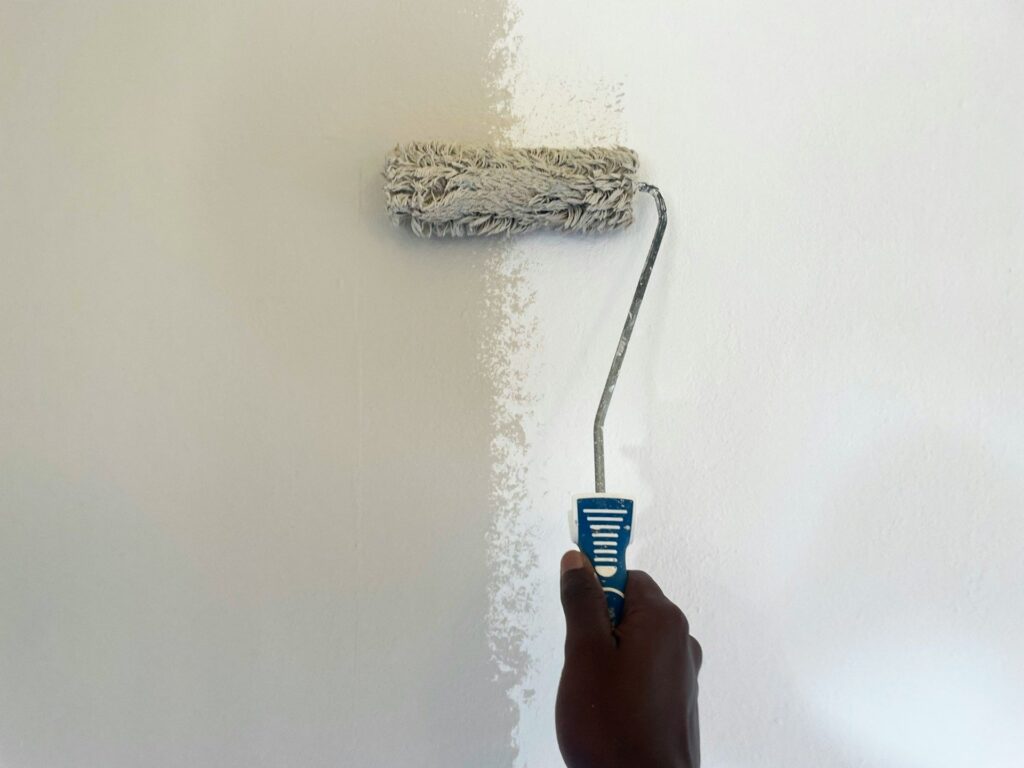
If the old paint is in good condition, you’ve cleaned it properly, and you’ve lightly sanded it, you may be able to go straight to your new semi-gloss paint.
When in doubt, check the paint and primer manufacturer’s recommendations.
A quality bonding primer is generally a safer choice than hoping the new paint will stick to an extremely slick surface.
#5 Paint The New Semi-Gloss
Now comes the fun part.
Stir your semi-gloss paint thoroughly and apply it in a smooth, even coat. Avoid loading your brush or roller with too much paint. Thick coats can take longer to dry and may leave drips, brush marks, or an uneven finish.
Let the first coat dry according to the paint manufacturer’s instructions, then check the coverage. If you can still see the old color or the finish looks uneven, apply a second coat.
Two thinner coats will often give you a cleaner result than trying to cover everything with one heavy coat.
Also, try not to keep brushing or rolling over paint that has already started to dry. That can create visible marks and make the finish less uniform.
Also Read: Can You Mud Over Paint?
#6 Let It Dry
Once the final coat is on, give it time to dry properly.
It can be tempting to touch the surface after an hour or two because it feels dry, but paint can take longer to fully cure. Follow the drying and recoat times listed on the paint can.
Be especially careful with doors, cabinets, trim, and other surfaces that get handled frequently.
The paint may feel dry but still be soft underneath.
Give it plenty of time before washing, scrubbing, closing painted doors tightly, or putting objects against the freshly painted surface.
Bottom Line
Yes, you can paint semi-gloss paint over an existing semi-gloss surface, but you must prep the area properly so the new coat sticks.
It’s a fairly simple DIY project. The biggest mistake is usually rushing the preparation.
Spend a little extra time getting the old surface ready, and your new paint job will have a much better chance of looking smooth and staying put.
Our Blogging Expert

Jairo Ramirez has been in the painting industry for over a decade and has served hundreds of customers across the greater Richmond, VA area.
Our Locations
Painting in Richmond, VA
Our Reviews
Popular Articles


Get An Estimate